We all know that improving customer experience can increase profits. One example of this with big numbers: airports. When I passed through London Heathrow recently, it struck me how much potential revenue airports are leaving on the table. The airport was so crowded that simply moving through the terminal was stressful. Rather than encouraging me to shop, I just wanted to find a quiet place to sit. (Such as a lounge… which are almost always overflowing! The bad airport customer experience seems to translate to increased lounge demand.)
While airports talk about improving “customer experience,” passengers are still faced with overcrowding and cramped gate areas. These stress points don’t just damage the airport’s reputation – they also reduce revenue.
Research from Airports Council International shows that every 1% increase in passenger satisfaction leads to about a 1.5% increase in non-aeronautical revenue (things like retail, food, and parking). The logic is straightforward: when passengers feel relaxed and cared for, they’re more likely to shop, eat, and explore. When they feel harried, they’re far more likely to sit tight and spend nothing.
What could airports do differently?
- Ease bottlenecks with better technology (biometric gates, CT scanners, real-time wait-time updates).
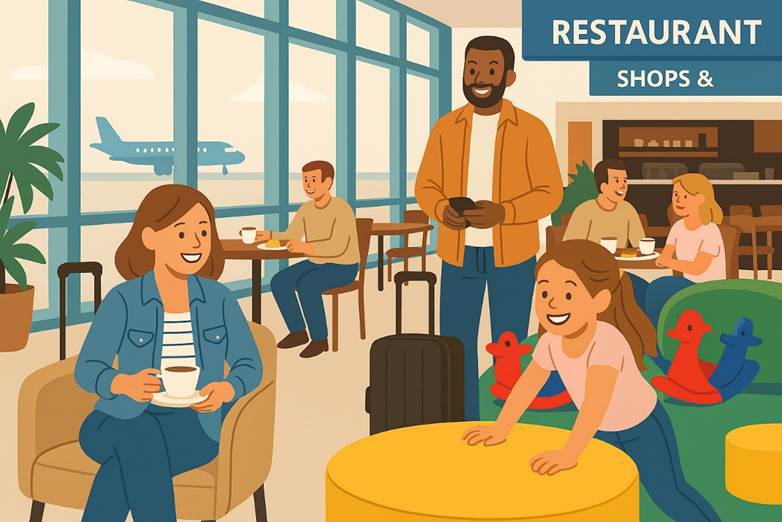
- Create comfort through accessible seating, quiet zones, and family-friendly spaces.
- Diversify retail beyond luxury brands, making shopping feel more inclusive and appealing to a wider range of passengers.
- Digitize the experience with apps that combine flight info, shopping deals, and food pre-order options.
For passengers, this means less stress and more enjoyment. For airports, it means higher per-passenger spending and stronger long-term loyalty from both travelers and airlines.
Take Heathrow as an example. Diversifying retail beyond luxury brands doesn’t cost much – retailers typically fund their own fit-outs, with the airport mainly responsible for curation and space planning. Add in a modest investment in more seating and quiet areas, and the total spend might be in the range of £25-40 million.
Now consider the revenue side:
- A more inclusive retail mix could lift spend per passenger by 5-10 %.
- Greater comfort could drive another 3-5 % increase by giving passengers the mental space to shop and eat.
Together, that’s £80-150 million in additional annual revenue for Heathrow – meaning the improvements could pay for themselves in well under a year.
Airports have immense opportunity to turn crowded, stressful journeys into smoother, more profitable ones. The business case is already proven: a better passenger experience is not just good service – it’s smart economics.
Find out how to improve the experience for your customers. Contact me at info at bureauwest.com and let’s discuss.
Source: “Enhancing customer experience to boost non-aeronautical revenues,” ACI World Insights, June 19, 2019
Notes:
- Yes, the data point about 1% increase in passenger satisfaction leading to 1.5% increase in non-aeronautical revenue is from a few years back, but is still being used in the category and there’s no reason to think the number has gone down.
- Cost and revenue estimates courtesy of the tireless Chat GPT.