As AI makes customer insights easier to generate, judgment becomes more valuable.
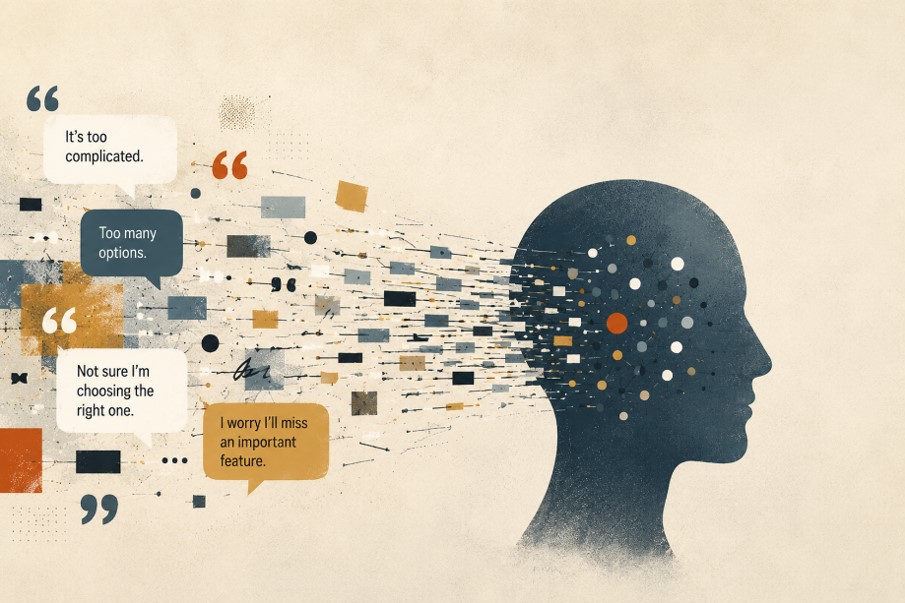
AI may be about to give marketers a new problem: not too little customer information, but too much.
I came away from Esomar Congress 2026 wondering whether we’re beginning to see the early signs of this. A recurring theme across many of the conversations and presentations was just how much easier AI is making it to work with customer information. Interviews that once required hours of manual review can be searched and synthesized quickly. Large numbers of open-ended responses can be analyzed in minutes. Customer reviews, call-center conversations, CRM records, social media, previous research and other sources can increasingly be brought together and interrogated at the same time.

But AI isn’t only making existing information easier to analyze. It is also making some kinds of customer information cheaper and easier to collect. Automated interviewing, adaptive surveys, rapid concept exploration, synthetic respondents and other emerging approaches can significantly reduce the time and cost required to investigate a question.
- In other words: more customer evidence × easier collection × easier analysis × cheaper questioning = dramatically more plausible insights.
That made me think about an earlier technological shift. When personal computers became widespread, many people assumed they would simply allow organizations to do the same work with fewer people. But productivity improvements don’t always work that way. When something becomes dramatically easier or cheaper, organizations often start doing more of it.
Something similar could happen with research. Imagine a marketer has a relatively modest question about customers. Today, they might decide it isn’t worth spending $30,000 and six weeks to investigate. But what if an AI-enabled approach can provide a useful first answer in a few hours? Suddenly, that question gets asked. And then another one. And another.
Competitors begin doing the same thing. Eventually, being able to investigate questions that once would have been considered too small or too expensive may stop being an extraordinary capability and become table stakes.
So perhaps the biggest effect of AI on research won’t be that companies need fewer answers. It may be that they start asking vastly more questions.
And that creates a different problem. When getting an answer becomes easy, the harder questions become:
- Which evidence should we trust?
- Which findings actually matter?
- And, ultimately, what should we do?
That is where I think the researcher’s role becomes more important, not less. AI can identify patterns, summarize evidence and generate plausible interpretations. But understanding what a finding really means often requires something different: context, experience, knowledge of the customer and the business, and the ability to recognize when the obvious interpretation is not necessarily the right one.
Researchers can also connect findings that may look contradictory, distinguish an interesting observation from something strategically important, and help stakeholders understand what the evidence means for the decisions they actually have to make.
In other words, the value may increasingly shift from producing answers to interpreting them – and helping organizations know what to do with them.
For years, researchers have worried about information scarcity – not enough data, respondents, time or budget. AI may begin to reverse that equation. If customer information becomes abundant, the scarce resource may become judgment – deciding what deserves our attention, what deserves our trust, and what it means for the business.
Need help deciding which customer inputs matter – and what they mean for your business? Contact me at info at bureauwest.com.