When insight fails, it’s rarely because the research was wrong. More often, it’s because the insight never quite fit how decisions actually get made inside the organization.
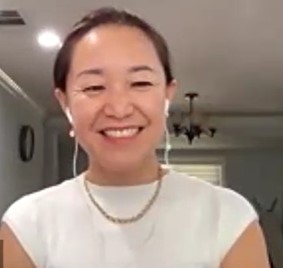
That reality came through clearly in my recent From Insight to Impact video interview with Jinghuan Liu Tervalon, a senior marketing and insights leader with deep experience across CPG, food and beverage, and omnichannel retail. Her perspective offered a useful reminder: the value of research and the value of the research partner are tightly intertwined.
- For Jinghuan, truly valuable research is first and foremost actionable – but not in the abstract sense the word is often used. In practice, that means explicitly tying insights to growth strategy and translating high-level ambition into concrete business terms. Growing penetration, for example, only becomes actionable when it’s reframed as a specific number of households, regions, or behaviors the organization can rally around.
- She also pointed out that executives are often presented with research that’s difficult to decipher – dense conclusions, large volumes of data, or findings that stop short of clear direction. When that happens, even strong insight can lose momentum. Actionability depends not only on what the research says, but on whether senior stakeholders can quickly grasp what it means for the business and what to do next. Translation and clarity, not just rigor, are what keep insight moving.
This emphasis on clarity connects directly to how Jinghuan thinks about the role of research partners. She spoke enthusiastically about partners who proactively schedule pre-meetings to understand strategy, stakeholders, and success criteria. “I absolutely love the pre-meetings,” she said, noting that skipping that step often leads to disappointment later – even when the research itself is sound.
What makes her perspective especially valuable is how candid she was about the internal dynamics surrounding qualitative research. Like many insights leaders, she regularly encounters skepticism: “that’s not representative,” or “that’s just one person.” At the same time, she sees how qualitative work uniquely brings consumers’ lives, motivations, and tensions to life in ways numbers alone cannot.
This is where the role of the qualitative research partner becomes inseparable from the value of the research itself. Jinghuan doesn’t just want partners who deliver insight – she values partners who help her influence. Insights teams don’t own activation; marketing and sales do. Their job is to persuade others to trust and act on what the research reveals.
- “We’re not in charge of marketing activation. We’re here to provide data and insights and recommendations. Fundamentally we’re in the business of influencing other people. So the soft skills are really, really critical.”
When qualitative partners help convey the value of qualitative insight internally, they’re not overstepping – they’re sharing a very real burden.
A good research partner needs marketing fluency, organizational awareness, and an understanding of how stakeholders prefer to receive and challenge information. Partners who can speak the language of growth, brand, and activation dramatically increase the odds that insight won’t end up admired once – and then quietly shelved.
The takeaway is deceptively simple: research creates impact not just because it’s insightful, but because it’s designed to be understood, trusted, and acted on inside the organization. And in that sense, “valuable research” and a “valuable research partner” are often one and the same.
Want research that will be understood, trusted, and acted on inside your organization? Contact me at info at bureauwest.com and let’s talk through the best approach.
Source: “From Insight to Impact: Interview with Jinghuan Liu Tervalon,” 12/23/25