What Becomes Scarce When Insights Are Abundant?

As AI makes customer insights easier to generate, judgment becomes more valuable.

AI may be about to give marketers a new problem: not too little customer information, but too much.

I came away from Esomar Congress 2026 wondering whether we’re beginning to see the early signs of this. A recurring theme across many of the conversations and presentations was just how much easier AI is making it to work with customer information. Interviews that once required hours of manual review can be searched and synthesized quickly. Large numbers of open-ended responses can be analyzed in minutes. Customer reviews, call-center conversations, CRM records, social media, previous research and other sources can increasingly be brought together and interrogated at the same time.

But AI isn’t only making existing information easier to analyze. It is also making some kinds of customer information cheaper and easier to collect. Automated interviewing, adaptive surveys, rapid concept exploration, synthetic respondents and other emerging approaches can dramatically reduce the time and cost required to investigate a question.

  • In other words: more customer evidence × easier collection × easier analysis × cheaper questioning = dramatically more plausible insights.

That made me think about an earlier technological shift. When personal computers became widespread, many people assumed they would simply allow organizations to do the same work with fewer people. But productivity improvements don’t always work that way. When something becomes dramatically easier or cheaper, organizations often start doing more of it.

Something similar could happen with research. Imagine a marketer has a relatively modest question about customers. Today, they might decide it isn’t worth spending $30,000 and six weeks to investigate. But what if an AI-enabled approach can provide a useful first answer in a few hours? Suddenly, that question gets asked. And then another one. And another.

Competitors begin doing the same thing. Eventually, being able to investigate questions that once would have been considered too small or too expensive may stop being an extraordinary capability and become table stakes.

So perhaps the biggest effect of AI on research won’t be that companies need fewer answers. It may be that they start asking vastly more questions.

And that creates a different problem. When getting an answer becomes easy, the harder questions become:

  • Which evidence should we trust?
  • Which findings actually matter?
  • And, ultimately, what should we do?

That suggests a useful discipline for anyone working with AI-generated insight. Before accepting an answer simply because it arrives quickly and sounds convincing, ask three more questions:

  • What is this conclusion based on?
  • What evidence would make me question it?
  • What decision would change if it were true?

Those questions may matter more as AI gets better, not less.

For years, researchers have worried about information scarcity – not enough data, respondents, time or budget. AI may begin to reverse that equation. If customer information becomes abundant, the scarce resource may become judgment – deciding what deserves our attention, what deserves our trust, and what it means for the business. Need help deciding which customer inputs matter – and what they mean for your business? Contact me at info at bureauwest.com.

What customer contradictions can tell us

Why the gap between what customers say and what they do can be more revealing than it first appears.

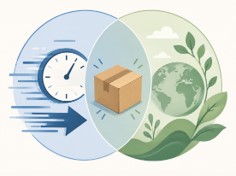
Many people say that sustainability matters to them. They may worry about excess packaging, the environmental cost of shipping, and the larger consequences of a culture built around instant consumption. They may feel uneasy when a small item arrives in an oversized box, surrounded by cardboard, plastic, and air pillows.

And yet many of those same people will choose next-day delivery when it is available.

It is tempting to interpret that gap as evidence that sustainability does not really matter to them. After all, when customers are given a choice between a greener option and a faster one, the faster one often wins. But that doesn’t give us the whole story.

  • A stated value doesn’t have to determine every choice in order to be real. In many cases, it is competing with something else that is also meaningful to the customer. Next-day delivery is not simply about speed. It can make someone feel prepared, organized, or in control. It can reduce the worry that an item will not arrive in time. It can be especially appealing when life feels busy or unpredictable, or when a customer simply does not want one more thing to manage.

The customer may care about sustainability. They may also care about the reassurance that comes from knowing an item is on its way and will arrive tomorrow. That is why it can be useful to look at the choice as a tension rather than a contradiction: between a longer-term value – reducing environmental impact – and an immediate need for certainty, convenience, or control.

  • Customers may manage that tension in different ways. One person may decide that one package will not make much difference. Another may tell themselves that the truck is already making deliveries in their neighborhood. Someone else may acknowledge the environmental cost but decide that, in this instance, speed matters more.

For researchers, the point is not to excuse the choice or to conclude that what customers say is meaningless. It is to understand what the more sustainable option is asking them to give up.

  • That requires going beyond questions such as, “How important is sustainability to you?” We also need to ask: What would make you hesitate before choosing slower delivery? What would you lose by waiting? What would make the lower-impact option feel like a reasonable choice rather than a sacrifice?
  • Those questions can reveal whether the real issue is urgency, habit, cost, uncertainty, or a desire to feel in control. And that distinction matters for companies trying to encourage a different behavior.
  • If the barrier is uncertainty, clearer delivery windows and better tracking may matter more than an environmental message. If it is control, giving customers more options to schedule or redirect deliveries may help. If it is habit, a well-designed prompt at checkout may be enough to make people pause and reconsider.

Understanding the tension does not guarantee that customers will choose the option a company hopes to encourage. But it gives companies a more useful place to start: identifying what customers would need to gain – or no longer feel they are giving up – for that option to become genuinely attractive.

Let’s explore the tradeoffs behind your customers’ decisions and what they mean for your strategy. Contact me at info at bureauwest.com

Loss aversion is real. So why do casinos thrive?

What looks irrational often isn’t. Here’s a simple way to decode what’s really going on.

In behavioral economics, the idea of loss aversion is simple: people feel losses more strongly than gains. Losing $50 hurts more than gaining $100 feels good.

By that logic, casinos should struggle; the odds are stacked against the player. And yet, the casino industry is thriving. So what’s going on?

One answer is that people are being irrational. But there’s another way to look at it – one that’s useful if you’re trying to interpret customer behavior that doesn’t seem to make sense.

This is where a simple decoding approach can help. When a behavior looks irrational, step back and ask: What kind of experience is this really? Because when most people walk into a casino, they’re not making a purely financial decision. They’re stepping into an experience.

Once you see that, a second question becomes useful: What tension might this experience be helping resolve?

Take control vs. surrender. Much of modern life demands control – planning, optimizing, getting it right. Over time, that can become exhausting. The casino offers a rare space where you’re allowed to let go. You place the bet. The wheel spins. And for a moment, the outcome is out of your hands. Losing money, in that context, isn’t just a loss. It’s part of the experience of surrender.

Or consider discipline vs. chaos. Daily life often requires restraint – budgets, routines, long-term thinking. The casino creates a temporary break from that discipline. Chaos isn’t a bug. It’s the feature. The money you spend isn’t just money. It’s the price of entering that environment.

There’s also the tension between present self and future self. Loss aversion tends to show up when we’re thinking about the future – “I should save my money.” But casinos are designed to collapse everything into the present moment. Lights. Sounds. Constant feedback. The future self fades. The present self takes over.

And in this case, there’s a more subtle tension at work: agency vs. fate. Even though the outcomes are random, casinos are structured to make you feel like you’re participating – choosing numbers, pulling the lever, deciding when to stop. So at the same time, you’re surrendering control… and exercising it. That sense of possibility is part of what makes the experience compelling.

Seen this way, the decision to gamble looks different. It’s not just about whether you win or lose money. It’s about whether the experience delivers something meaningful.

So how might you use this in practice?

When a customer behavior doesn’t make sense on the surface, try three steps:

  1. Step back from the transaction. Instead of asking “Is this a good deal?” ask: What experience is this creating?
  2. Look for the underlying tension. What pressure might the customer be navigating? In this case, we saw tensions like:
    – control vs. surrender
    – discipline vs. chaos
    – present self vs. future self
    – agency vs. fate
  3. Reframe the decision. Instead of evaluating it in terms of gain vs. loss, ask: What does this behavior help them feel or resolve?

Behavioral science gives us powerful tools. But it often assumes that people are evaluating outcomes in terms of gains and losses. In many cases, the real question is something closer to “was it worth it?” That depends on more than the outcome. It depends on how the experience fits into the tensions they’re living with. Customers aren’t just buying products. They’re resolving tensions in their lives. And sometimes, what looks irrational at the surface level starts to make sense once you see what’s underneath.

If you want to better understand your customers’ seemingly irrational behaviors – and turn that understanding into clearer decisions – let’s talk. Contact me at info at bureauwest.com.

Customers aren’t as irrational as they seem

A core idea in behavioral economics is that customers don’t always behave rationally. From Dan Ariely’s Predictably Irrational onward, we’ve had a language for the ways decisions deviate from purely logical models.

That lens has been useful, but it may also have led us, subtly, in the wrong direction. What if many of the decisions we describe as “irrational” aren’t irrational at all? What if they’re meaningful – but we’re missing the context that makes them make sense?

In my work, I’ve found that what often sits underneath these decisions is tension. Not random inconsistency, but a structured set of competing forces that people are trying to navigate in their lives. Some of those tensions show up again and again:

  • People want to feel independent, but modern life makes them dependent on systems.
  • People want to feel disciplined, but their days are chaotic.
  • People want to express their individuality, but they also want to feel a sense of belonging.
  • People want to become a better version of themselves, but change is difficult.

When we only look at the customer’s specific decision, it can seem inconsistent or even contradictory. But when we look at the tension the decision is helping resolve, a different kind of logic appears.

Take a familiar example: the pickup truck. Drive through almost any suburban neighborhood in the U.S., and you’ll see them – large pickup trucks parked in driveways, often spotless, their beds empty. For many of these owners, the truck is rarely used for hauling or towing. Day to day, it’s used for commuting, errands, and school drop-offs. From a purely functional standpoint, it’s more vehicle than most people need. It’s harder to park, more expensive to run, and less efficient than many alternatives.

And yet, it’s a remarkably common choice. If we look at that through a purely logical lens, it’s easy to see the decision as inefficient, or even irrational. But look at it through the lens of tension, and something else comes into view.

For many buyers, the pickup truck sits at the intersection of independence and dependence. Even if daily life rarely demands it, the truck carries the possibility of self-sufficiency – the sense that “I could handle it if I needed to.” In a world where so much of life depends on systems, services, and other people, that feeling has real value.

At the same time, the truck often navigates a tension between individuality and belonging. It signals a certain identity – capable, practical, grounded – while also connecting the driver to a broader cultural narrative that feels familiar and shared.

Seen this way, the choice isn’t irrational. It’s helping the customer navigate tensions that aren’t visible if we only focus on features, price, or stated needs.

Once you start looking at customer behavior through this lens, patterns begin to emerge. Decisions that once felt inconsistent start to feel structured. What looked unpredictable starts to feel, in many cases, surprisingly coherent.

I explore this lens more fully in my new book, The American Customer: The Hidden Forces That Shape Choice, which is now officially out. The book looks at how culture and identity shape the way people interpret their choices – and why those choices carry meaning that isn’t always immediately visible. It offers a way to move beyond describing behavior to actually decoding it.

The book is available here.

I’ve also been developing these ideas further in a presentation, Decoding the American Customer, where I explore how to identify these tensions and apply them in practice. If that would be useful for your team or organization, please contact me at info at bureauwest.com.

Source: “The American Customer: The Hidden Forces That Shape Choice,” Jay Zaltzman, March 23, 2026