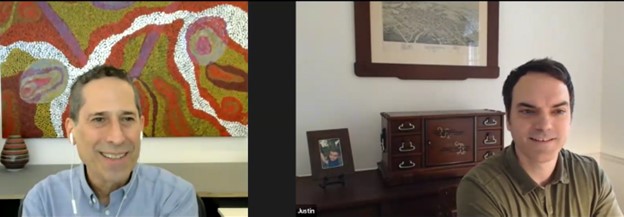
Gerald Zaltman dares us to own our thinking

On ambiguity, ignorance, imagination – and the limits of AI.

I had the opportunity to interview Gerald Zaltman – creator of ZMET and one of the leading voices in uncovering the non-conscious drivers of thought and behavior – about his new book, Dare to Think Differently. (Note: we’re not related… as far as we know!)

Jerry told me the impetus for the book came from his interest in how people approach ill-structured or messy problems – the kinds of problems we and our clients deal with every day.
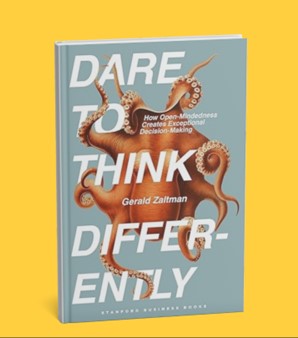
Here are four ideas that stood out as especially relevant for leaders, strategists, and insights professionals:

1. Embracing ambiguity
Jerry offered a deceptively simple idea: The primary job of a mind is to make meaning out of ambiguity.

We often treat ambiguity as a problem to eliminate. In strategy sessions and debriefs, the pressure is to “get clarity” quickly. But ambiguity is often where the opportunity lives. It’s where:

  • The next product idea is hiding
  • The overlooked emotional tension sits
  • The unexamined assumption operates

For those of us in insight roles, our job isn’t to prematurely tidy ambiguity. It’s to help organizations sit with it long enough to extract meaning.

2. Ignorance is where competitive advantage lives
Jerry said, “Ignorance is where the next competitive advantage is dwelling.”
 
Most organizations treat ignorance as something to conceal. In healthy cultures, it’s something to surface. When something feels unclear in a category or customer journey, that fog may be signal, not noise.
 
A few practical questions this suggests:

  • What are we missing?
  • What assumption are we not aware we’re making?
  • What piece of information would make this puzzle clearer?

Those questions alone can change how research is commissioned and how findings are used.

3. Imagination comes before creativity
Jerry drew a distinction I found clarifying:

  • Imagination is seeing what’s missing.
  • Creativity is making that idea workable.

We often treat creativity as the main event. But in his framing, creativity is an off-ramp from imagination – what makes an idea practical or executable.
 
Imagination comes earlier. It’s the ability to picture what could fill the gap in an ambiguous situation – to see what we don’t yet fully understand. Without imagination, creativity has nothing solid to build on.
 
For those of us working in research and strategy, that’s a useful reminder: before refining the solution, we have to ensure we’ve identified what’s actually missing.
 
Imagination requires sitting with ambiguity long enough to notice the gap – and that may be the harder discipline.

4. Thinking “like” vs. thinking “as” – the AI Question
Our conversation also turned to AI. Jerry described the difference between thinking “like” and thinking “as.”
 
AI can help us think like something – simulate patterns, accelerate analysis, generate language. But thinking as a human involves embodied, constantly shifting cognition that shapes imagination and meaning.
 
His warning was clear: AI can augment imagination and creativity, but it cannot replace them. The risk isn’t using AI – the risk is outsourcing imagination.
 
Taken together, these ideas are about ownership of thinking. Ownership shows up in how you:

  • Stay with ambiguity instead of rushing to clarity
  • Surface ignorance instead of hiding it
  • Strengthen imagination before jumping to execution
  • Use AI as a tool without surrendering judgment

When I asked Jerry why someone should read the book, he resisted giving a conventional benefit statement. Now I understand why. The book doesn’t hand you conclusions. It sharpens your ability to reach better ones.

You can watch the full interview here: https://www.youtube.com/watch?v=8H75GE1O91w

If you’re wrestling with an ill-structured problem and want to turn ambiguity into meaningful direction, I’d welcome a conversation. Contact me at info at bureauwest.com.

Sources: “From Insight to Impact: Interview with Gerald Zaltman,” 2/24/26; “Dare to Think Differently: How Open-Mindedness Creates Exceptional Decision-Making,” Gerald Zaltman, 2/24/26

“We’re in the business of influencing other people”

When insight fails, it’s rarely because the research was wrong. More often, it’s because the insight never quite fit how decisions actually get made inside the organization.

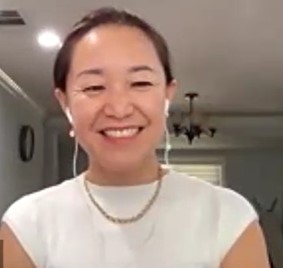
That reality came through clearly in my recent From Insight to Impact video interview with Jinghuan Liu Tervalon, a senior marketing and insights leader with deep experience across CPG, food and beverage, and omnichannel retail. Her perspective offered a useful reminder: the value of research and the value of the research partner are tightly intertwined.

  • For Jinghuan, truly valuable research is first and foremost actionable – but not in the abstract sense the word is often used. In practice, that means explicitly tying insights to growth strategy and translating high-level ambition into concrete business terms. Growing penetration, for example, only becomes actionable when it’s reframed as a specific number of households, regions, or behaviors the organization can rally around.
  • She also pointed out that executives are often presented with research that’s difficult to decipher – dense conclusions, large volumes of data, or findings that stop short of clear direction. When that happens, even strong insight can lose momentum. Actionability depends not only on what the research says, but on whether senior stakeholders can quickly grasp what it means for the business and what to do next. Translation and clarity, not just rigor, are what keep insight moving.

This emphasis on clarity connects directly to how Jinghuan thinks about the role of research partners. She spoke enthusiastically about partners who proactively schedule pre-meetings to understand strategy, stakeholders, and success criteria. “I absolutely love the pre-meetings,” she said, noting that skipping that step often leads to disappointment later – even when the research itself is sound.

What makes her perspective especially valuable is how candid she was about the internal dynamics surrounding qualitative research. Like many insights leaders, she regularly encounters skepticism: “that’s not representative,” or “that’s just one person.” At the same time, she sees how qualitative work uniquely brings consumers’ lives, motivations, and tensions to life in ways numbers alone cannot.

This is where the role of the qualitative research partner becomes inseparable from the value of the research itself. Jinghuan doesn’t just want partners who deliver insight – she values partners who help her influence. Insights teams don’t own activation; marketing and sales do. Their job is to persuade others to trust and act on what the research reveals.

  • “We’re not in charge of marketing activation. We’re here to provide data and insights and recommendations. Fundamentally we’re in the business of influencing other people. So the soft skills are really, really critical.”

When qualitative partners help convey the value of qualitative insight internally, they’re not overstepping – they’re sharing a very real burden.

A good research partner needs marketing fluency, organizational awareness, and an understanding of how stakeholders prefer to receive and challenge information. Partners who can speak the language of growth, brand, and activation dramatically increase the odds that insight won’t end up admired once – and then quietly shelved.

The takeaway is deceptively simple: research creates impact not just because it’s insightful, but because it’s designed to be understood, trusted, and acted on inside the organization. And in that sense, “valuable research” and a “valuable research partner” are often one and the same.

Want research that will be understood, trusted, and acted on inside your organization? Contact me at info at bureauwest.com and let’s talk through the best approach.

Source: “From Insight to Impact: Interview with Jinghuan Liu Tervalon,” 12/23/25

Even experts need help choosing

Experienced customers are often unsure how to choose; the opportunity for marketers is to guide them with clarity.

In a recent project about how tennis players choose tennis balls, one of the most striking findings wasn’t about durability or bounce. It was about confidence. Even experienced players – people who have played for years and know the sport inside-out – told us they don’t really know how to choose a tennis ball. They’re confident on the court, but not in front of the shelf.

  • What they do know is which balls the pros use. And that becomes the anchor for their own choices. If the top-tier “professional” ball feels too expensive, they often pick the next version from the same brand, assuming it must be similar enough. The nuances of felt type, bounce characteristics, or durability rarely play a central role. Instead, players rely on borrowed expertise.

Tennis is just the entry point to a larger phenomenon: expertise in using a product does not necessarily translate into expertise in choosing it.

This gap is wider today than ever. Shoppers face more information than they can reasonably absorb across the many domains of their lives. Every category has its own specs, rankings, reviews, and jargon. People simply don’t have the bandwidth to stay on top of all of it. So even experienced users – people who know the activity well – may feel underqualified when navigating the marketplace. In that context, relying on shortcuts becomes not just common but rational. Borrowing the judgments of pros, brands, or other trusted sources helps buyers reach a confident decision quickly.

  • We see this across categories. A skilled home cook might pick pots and pans based on what a celebrity chef endorses. A long-time runner may choose shoes because elite marathoners wear them. A serious hobby photographer often selects equipment based on a professional’s recommendation rather than the features that truly match their own needs.
  • This same dynamic shows up in B2B. Business buyers are experts in their fields but not necessarily in the specific products they’re evaluating. A manufacturing executive may know operations inside-out yet still defer to analysts, integrators, or the industry’s “market leaders” when selecting software or equipment. A procurement team may lean on vendor tiering or Gartner rankings because it feels safer than decoding dense technical sheets.

The broader insight: buyers often want reassurance more than mastery. In a world of overwhelming information, feeling confident matters more than knowing every detail.

For marketers, this insight creates several opportunities:

  • Make the choice architecture intuitive. Use naming, packaging, and product tiers that clearly signal who each option is for.
  • Provide simple heuristics. Offer clear starting points: “If you value X, start here.”
  • Translate expert logic into everyday language. Emphasize what each feature does for the customer.
  • Clarify your product ladder. Highlight step-up benefits and trade-offs.

The takeaway: Your customers don’t need to become experts. They need to feel they’re making a smart, safe choice – and they’ll gladly borrow your expertise if you offer it in a clear, human way.

Want to help your customers make the right choice? Email me at info at bureauwest.com.

“Companies are data-rich but information-poor”

My second From Insight to Impact video interview was with Justin Amendola, a senior marketing and strategy executive with a great deal of experience in the digital field, most recently at Meta. We talked about how companies can get more value from insights. One quote from Justin stuck with me: “Most companies are data-rich and information-poor.” It’s a striking observation that connects to everything we discussed.

The conversation crystallized three ideas for me: that impact begins with alignment, that courage means knowing when to listen and when to lead, and that AI will redefine, not replace, the human side of insight.

1. Aligning across teams

Justin’s first recommendation was simple but powerful: get the right people in a room early in the year. Invite leaders from marketing, product, and sales to share their top five priorities. Then look for the overlap. “Even if only two or three priorities align,” he said, “that’s where you start.”

It’s such a practical way to make research more useful. Instead of insights being delivered into a vacuum, they’re designed around shared goals from the beginning. As Justin put it, when teams align on questions upfront, they’re more likely to use the answers all year long.

And for those of us who work with clients, this is something we can offer: to facilitate that kind of alignment session. Helping teams clarify what insights they’ll need may be just as valuable as providing the insights themselves.

2. Knowing when to listen and when to lead

Justin also shared a candid story about a digital product launch that didn’t go as planned. The research made it clear that customers weren’t ready for the new apps, but leadership pushed ahead anyway. Six months later, several of the apps were quietly shelved.

It’s a story many of us have seen play out in different forms. Of course, marketers can point to famous counter-examples, like the Sony Walkman, where customers said “no” in testing, but loved the product once it was launched. So how do you know when to move forward and when to pause?

Justin’s take: timing and readiness matter. “Even great ideas fail when the market isn’t ready,” he said. Sometimes a hunch is right, but early. Our role as researchers is to help leaders discern which situation they’re in. That might mean reframing the question, testing the why behind hesitation, or helping teams recognize when it’s time to pivot instead of push.

3. Humans + AI: the next chapter for insights

Finally, we talked about how AI is changing the field. Justin’s perspective was refreshing: “Researchers should think of AI as a complement, not competition.” He believes humans still have an edge in understanding context – especially emotional and cultural nuance. AI can process the data, but people translate it into meaning.

In the future, research teams may become leaner but more impactful, focusing on the 20 percent of work that adds the most value. With AI handling the heavy lifting, we’ll have more time for what humans do best: connecting the dots, telling stories, and understanding what people truly care about.


What struck me most from our conversation is that the role of the researcher is expanding. We’re not just interpreters of data – we’re facilitators, truth-tellers, and translators between information and action.

Whether it’s aligning teams, balancing conviction with evidence, or partnering with AI, our job is to help organizations turn all that data into wisdom.

You can view the full interview with Justin, as well as future interviews, on my YouTube channel here.

Let’s talk about how to generate insights that will benefit your organization. Contact me at info at bureauwest.com.


Source: “From Insight to Impact: Interview with Justin Amendola,” Bureau West, 10/8/25