Insights that make an impact

I’m excited to announce the launch of my video series “From Insight to Impact” – conversations with leaders in marketing, strategy, and research on how to ensure research delivers meaningful business value to client companies.

My first guest was James Forr, Head of Insights at Olson Zaltman, the firm founded by Dr. Gerald Zaltman (Harvard Business School) and Dr. Jerry Olson (Penn State University). I asked James how we can provide more value to clients, especially in the age of AI. Two of his points really stood out:

  • Ask clients better questions
  • Ask research participants better questions
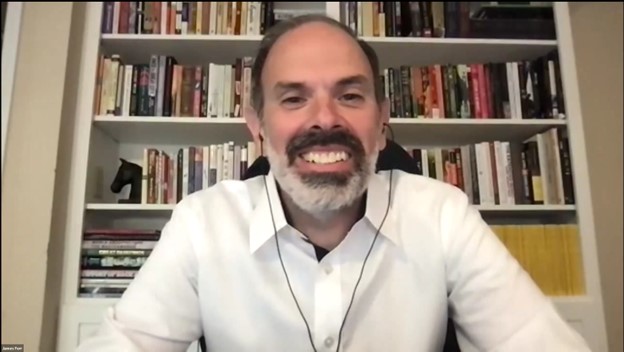
On the client side, James said “it’s our job many times to try to help clients think about their problems a little bit more deeply. Sometimes the question that you as a client want to answer is not necessarily the question that you should ask.”

  • He gave an example where a client was looking to reverse a decline in sales of their breakfast cereal. They originally wanted to conduct research to understand their brand better, but James and his team suggested learning more about the context in which the brand plays, specifically, breakfast. The client knew that breakfast was an important bonding time for mother and child, so they designed research to learn more about that relationship. They found there were developmental steps children go through, and moms frequently would discover the child went to the next step (e.g., made a friend independently) over breakfast. Those insights helped the client create highly effective marketing.

Beyond reframing client questions, James also emphasized listening more deeply to participants. He gave an example of a project where a couple consumers said that it’s important to eat healthy “these days.” While it would be easy to skip over the mention of “these days,” James thought there was something behind that. Subsequent probing found that people had concerns about “big food” and “big pharma” – concerns that were shaping consumer behavior in new ways. 

AI can process vast amounts of data, but it doesn’t catch those subtle moments. Human researchers add value when we slow down, notice unexpected comments, and follow up. I’m reminded of an experience I had facilitating a board strategy session. One board member said something that made everyone else laugh uncomfortably. I continued on, because I had a lot to cover. But then I caught it and circled back. That issue turned out to be the crux of the problem of how the organization saw itself and the basis for how it would move forward. It can be difficult to note these kinds of statements because we tend to have packed discussion guides. But it’s worth making that extra effort!

You can view the full interview with James, as well as future interviews, on my YouTube channel here.

Let’s talk about how to maximize the impact of your next research project. Contact me at info at bureauwest.com.

Source: “From Insight to Impact: Interview with James Forr,” Bureau West, 9/24/25

Better Qualitative Analysis with AI

We know AI can save researchers time. It can generate transcripts in minutes, cluster quotes into themes, and even draft summaries. That’s useful, but even more important, can AI make the analysis better and more valuable to clients? I think it can.

Here’s how:

Moving beyond speed to depth. Traditional analysis often stops at description: “Here’s what participants said.” With limited time, it’s easy to get stuck at that level. AI can free us from the mechanical work so we can push deeper – to why certain comments matter, what patterns emerge, and where tensions lie.

Seeing what humans might miss. AI excels at scanning vast amounts of text and surfacing signals we might overlook. It can flag contradictions, unusual word choices, or subgroup differences that don’t immediately catch the eye. The researcher then brings judgment and context to interpret what these signals mean. Together, it’s a more robust analysis than either could do alone.

  • Of course, we need to know to ask AI for these things. For example, “were there any situations where a participant contradicted something they said previously?” Or “were there any differences of opinion between segment x and segment y?”

Challenging assumptions more systematically. One of the most valuable roles of qualitative research is to challenge client assumptions. But – though I hate to admit it – we researchers also have assumptions and biases. AI can help us make sure we aren’t swayed by the most memorable participants and don’t forget some of the quieter exchanges.

  • I ask AI to check my assumptions as well as those of my clients. I might ask “did most participants prefer x?” and be surprised when it turns out that I was just remembering a vocal minority and many participants actually didn’t feel that way. And of course, AI analysis can easily back up these statements with quotes. So if we need to tell our clients that the findings did not match their assumptions, we can provide proof!

Strengthening implications. Clients don’t just want findings; they want implications. AI can assist by drafting preliminary “implication statements” from the data clusters it identifies. The researcher then sharpens these into strategic recommendations. This combination helps ensure that insights aren’t just descriptive, but actionable.

  • I like to work with AI as a kind of brainstorming partner and challenge its suggestions. That back-and-forth discussion can result in stronger implications.

When AI takes on the mechanics of coding and clustering, the researcher’s role shifts upward: from data wrangler to meaning-maker, from summarizer to strategist. That shift is where qualitative research delivers its greatest value. The key is not to let AI do the thinking for us, but to let it clear space and surface signals so we can do the thinking that matters most.Let us provide our thinking for your research needs! Contact me at info at bureauwest.com and let’s discuss how to best answer your research questions.