Learn to use AI now… before the competition

Artificial intelligence (AI) has been in the news lately because a recent advance in the technology now makes AI both significantly more advanced and more accessible to businesses. While in the past, companies needed big budgets and teams of developers to utilize AI, current tools have opened the technology to medium and even small companies.

Marketing is one area where companies are benefitting from AI.  A few examples:

  • Companies are using AI to analyze data on customer behavior, demographics, and purchase history to create personalized marketing campaigns that are more likely to resonate with individual customers.
  • Retailers are using AI-powered chatbots to provide personalized product recommendations to customers based on their browsing history and purchase history.
  • Restaurants are using AI-powered predictive analytics to analyze customer data and make predictions about which menu items are likely to be popular, allowing them to optimize their menu and improve their sales.

And there are many benefits beyond marketing, such as:

  • Companies are uncovering new business opportunities by using AI to analyze customer behavior and preferences.
  • Banks and other businesses are using AI to detect and prevent fraud.
  • Manufacturers are using AI-powered predictive maintenance systems to predict when equipment is likely to fail, so that maintenance can be scheduled before a breakdown occurs.

And that’s just a small sample of the ways AI is being used.  To be fair, many people have concerns about AI, such as job losses and potential abuse of AI systems.  But like it or not, these advances are coming and companies that don’t get involved may find themselves at a competitive disadvantage.

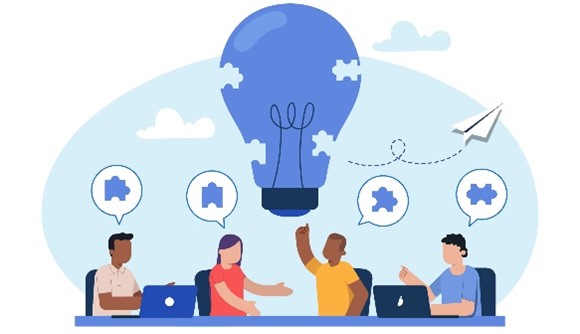
I’m starting a mastermind group for those interested in discussing how to utilize AI to benefit their companies.  Please let me know if you’d like to participate.  Email me at info at bureauwest.com.
Sources: Bureau West research; ChatGPT; “How AI could empower any business,” Andrew Ng, TED2022; Graphic: Designed by pikisuperstar / Freepik

How Gen Z differs from previous cohorts

Generation Z, people born between 1997 and 2012, make up 20% of the US population, and are the next important group for companies to consider, both as prospective customers and potential employees.

Clockwise from top left: James Charles, Chloe Kim, Greta Thunberg, Billie Eilish,Lil Nas X, and Zendaya. (https://www.sfweekly.com/culture/who-is-gen-z-really/ Photo Credit: Grace Z. Li/ DFree/ Tinseltown/ Kathy Hutchins/ Live Oeian via Shutterstock)

I was at the QRCA Annual Conference last week – it was great to see my fellow qualitative researchers in-person! – and I attended a presentation and panel led by Jamin Brazil about Gen Z.  Whenever people talk about characteristics of cohorts, I wonder whether those characteristics have to do with the cohort specifically, or the life stage they’re in.  I still remember, at the beginning of my research career, people saying that Generation X were “slackers.”  Then, a few years later, they said “we were wrong, they’re actually hard workers!”  That’s because when they were college students they weren’t as hard working as when they got married and had kids!

Having said that, there do seem to be some characteristics that really are specific to Gen Z.  These came up in the presentation and were confirmed by the Gen Z attendees sitting with me during the session, as well as in research interviews I’ve been conducting with members of the cohort.  Marketers and employers should consider these characteristics if they want to appeal to Gen Z:

  • They are digital natives: That is, they have always lived with social media and smartphones.  As a result, they are quite experienced and savvy when it comes to inauthenticity and digital scams.  When it comes to purchasing decisions, they rely on influencers (people on social media regarded as experts or taste-makers in a specific area) more than other cohorts.
  • They are pragmatic: In contrast to Millennials who were raised by Baby Boomers and who tend to be idealistic, Gen Z were raised by Generation X parents – and saw their parents struggling during the great recession.  They tend to focus on saving money.
  • They are diverse: 49% of Gen Z identify as non-white, more than any cohort before them. They are more likely to have grown up amid diverse family structures – whether in a single parent household, a multi-racial household, or a household in which gender roles were blurred. As a result, they are less fazed than previous generations by differences in race, sexual orientation or religion.

The above has implications not just for marketers and employers, but also for researchers.  We are finding that Gen Z members are more difficult to recruit as research respondents.  They are mistrustful of traditional recruiting and worry about data security.  Research recruiters are finding greater success recruiting through social media and word of mouth, rather than traditional methods.  And Gen Z members are demanding higher research incentives, thinking of research participation in much the same light as a “side hustle.” 

How can you appeal to your Gen Z prospects?  Let’s ask them!  Email me at info at bureauwest.com.

Sources: Panel Discussion: Meet Your Future – Gen Z ARE the Future of Research, both as Participants and Researchers, QRCA Annual Conference, 5/16/22; What Are the Core Characteristics of Generation Z?, Annie E. Casey Foundation, 4/14/21; Bureau West research

Marketers define new best practices

I recently joined my colleagues at ThinkGlobal Qualitative in conducting research with marketing and insights leaders around the world to understand the challenges they are facing and their best practices in handling those challenges.

Their biggest question: how can we strategize and move forward during this crisis when customers’ attitudes seem to change every few weeks?

Certainly the changing circumstances have required some quick course changes for businesses around the world.  But upon further discussion, we realized that obtaining a deeper understanding of our customers can uncover their foundational values to help us better navigate their changing circumstances.  Qualitative research is particularly well-suited to get at that kind of deep understanding.  It goes beyond the surface questions and asks “why?”

I co-wrote an article based on the research, “Marketers Get a GRIP on the New Normal.” 

GRIP refers to the top four challenges discussed:

  • Growth – how to maintain and grow the business in a volatile world
  • Recovery – how to function most effectively in the new normal
  • Innovation – figuring out the new ways brands will interact with customers
  • Pivot – how to make those changes quickly and effectively

The article discusses meeting those challenges and outlines approaches companies can use to not only survive the crisis, but actually thrive.  Click here for the article.

Let’s get a deeper understanding of your customers in order to figure out how your organization can meet those challenges. Call me at 760-469-9266 or email info at bureauwest.com.

In the current crisis, it’s innovate or die

OK, maybe I’m overstating it … or am I? 

The pandemic has caused significant changes for almost every company.  Many have seen a sharp drop in revenue.  Others have had revenues remain the same or even increase, but customers’ needs have changed.  Many have new rules and restrictions about how they can do business.  Some restrictions may be relaxed soon… but customers aren’t sure it’s safe to go back to their old behaviors.

The result of this chaos can be summed up in one word: Disruption.  And when it comes to dealing with disruption, companies that fail to innovate do so at their peril. 

We’ve all heard the stories of companies that ignored disruptions going on around them.  Nokia didn’t realize that data would become more important to users than voice.  Kodak ignored digital photography.  Blockbuster refused to believe their model could be improved upon.

And then there are the companies that recognized disruption and innovated.  Netflix was in the business of mailing DVDs to their customers.  The company saw the growth in high-speed internet and developed its streaming service.

More recently, online meeting provider Zoom grew immensely as a result of the lockdown… and then had to deal with significant disruption when security flaws were discovered.  As a result, many companies and organizations stopped using Zoom.  The company reacted quickly, releasing versions of their software that addressed vulnerabilities and going so far as to acquire security company Keybase to help with their security and privacy efforts.  Now the New York City Department of Education and other organizations have lifted their bans on Zoom use.

So how can you ensure your company doesn’t get crushed by disruption?

We recommend conducting a brand innovation process, which includes the following:

  • A review of how the competitive landscape has changed as a result of the current crisis
  • Research with customers and prospects to understand how they feel and what they are doing right now
  • Disruption workshop with your key stakeholders.  Looking at each of the “4 Ps” –Product, Price, Place, and Promotion – what has changed in the current environment?  How should the brand evolve to address those changes?  A SWOT exercise leading into brainstorming: what could be done better or differently when it comes to each of the four Ps?  What are ways to leverage the company’s strengths and opportunities (including new opportunities) in order to overcome the weaknesses and threats?

Can Bureau West help? I thought you’d never ask!  I have teamed up with Joe Sharlip, an expert brand strategist, to offer brand innovation to our clients. Call me at 760-469-9266 or email info at bureauwest.com to discuss how best to tailor the process for your needs.